
Why Do Patients Choose a Boutique Orthodontic Practice Over a Large Dental Chain?
Patients choose boutique orthodontic practices for continuity, customized treatment planning, and direct access to the orthodontist who owns the practice. You see the same clinician at every visit, your plan is built for your case rather than a corporate protocol, and the office pace is set by treating fewer patients. Large dental chains compete on scale instead: more locations, longer hours, and in-network volume pricing.
Neither model is automatically better care. They are built to optimize for different things, and the tradeoffs land differently depending on what matters to you. Orthodontics runs 12 to 30 months and involves dozens of small judgment calls about tooth movement, so who is making those calls, and whether it is the same person each time, carries more weight here than it does for a single filling.
This guide breaks down what actually separates the two models, where each one wins, how to tell which kind of office you are sitting in, and the questions worth asking before you commit.
What Actually Separates a Boutique Practice From a Corporate Chain?
The real difference is ownership, and everything patients notice downstream flows from it. A boutique practice is owned and run by the orthodontist treating you. A corporate chain or DSO-supported office is owned by a management company or investor group that employs the clinicians and sets the business targets.
Who owns the practice?
In a boutique practice, the owner is a clinician whose reputation is attached to every case. Beverly Hills Orthodontics was founded in 2008 by Dr. Monica Madan, and she still owns and leads it. In a chain, ownership usually sits with a dental service organization or private equity group, and the treating orthodontist is a salaried or contracted employee who may rotate between locations.
Who designs your treatment plan?
Boutique practices tend to plan case by case, because the owner-orthodontist has the authority to do whatever the case needs. Chains often standardize: a defined menu of appliances, defined appointment intervals, defined upgrade paths. Standardization is genuinely useful for routine cases and genuinely limiting for unusual ones.
Who do you actually see at each appointment?
This is the difference patients feel most. In a small practice, the orthodontist who diagnosed you is the one checking your progress a year later. In a multi-location chain with rotating clinicians, continuity depends on scheduling luck, and the person adjusting your wire may be reading your chart for the first time.
How Does Ownership Change Your Day-to-Day Treatment Experience?
Ownership changes three practical things: how much time you get in the chair, how consistently your plan is followed, and how decisions get made when something unexpected happens mid-treatment.
Continuity of care
Tooth movement is cumulative. An orthodontist who has watched your case from the first scan notices when a tooth is tracking a few weeks behind schedule, because they remember what it looked like last time. That pattern recognition is hard to hand off in a chart note, and it is the single strongest argument for continuity.
Time per appointment
Smaller practices book fewer chairs, which usually means a longer, calmer visit and a real conversation instead of a two-minute check. If you are the kind of patient who arrives with questions written down, that pacing matters.
What happens when your case goes off-plan
Cases deviate. A tooth resists, a bracket fails repeatedly, an aligner stops tracking. In an owner-led practice the person who can authorize a change of approach is standing next to you. In a larger structure, that call may involve escalation, a different provider, or a wait for the rotating specialist.
Do You Give Up Advanced Technology by Choosing a Smaller Practice?
Not necessarily, and this is the most common misconception about boutique care. Technology purchasing is a decision about priorities, not only about size. A single-focus orthodontic practice reinvests in orthodontic equipment specifically, while a general dental chain spreads capital across hygiene, restorative, surgical, and imaging needs across every location.
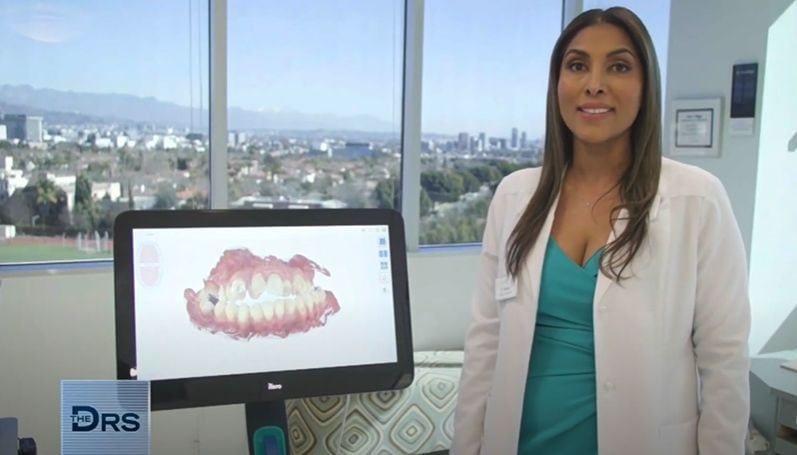
At BHO, that reinvestment is visible in the equipment list on our advanced technology page: 5D iTero digital scanners instead of putty impressions, digital X-rays, and AI-powered virtual monitoring so progress can be reviewed between visits from a smartphone scan. We run more iTero scanners than any other practice in the state of California.
Appliance selection tells the same story. We offer Invisalign as a Blue Diamond Top 1% provider, InBrace for patients who want a completely hidden appliance behind the teeth, and LightForce custom brackets for patients in braces. That is a deliberately narrow, deep menu rather than a broad one.
What should you actually ask about technology?
Skip the brand names and ask what the office does with the tools. Do they scan digitally or take impressions? Can you see a simulation of your projected result before you commit? Can they monitor progress remotely if you travel? Those answers tell you more than a lobby list of logos.
How Do Cost and Fee Transparency Compare?
Boutique and chain practices are not reliably separated by price. They are separated by how the price is built and how clearly it is explained. Chains often lead with a low advertised starting figure that assumes a simple case, then price complexity as add-ons. Owner-led practices more often quote a single case fee that covers the plan start to finish.
The number that matters is the all-in cost of finishing treatment, so ask every office you visit the same three questions:
- What does the quoted fee include? Records, scans, all adjustment visits, refinements, and the first set of retainers, or only some of those.
- What happens if treatment runs long? Some offices charge per additional visit or per refinement round once an estimated window closes.
- What is the retention plan? Retainers and replacements are part of the real cost of a straight smile, not an afterthought.
Our team walks through fees, insurance coordination, and payment plan options at the consultation, before you are asked to decide anything. If a quote is hard to compare against another office’s quote, that is worth naming out loud rather than guessing at.
Boutique Orthodontic Practice vs. Large Dental Chain: A Side-by-Side Look
Here is how the two models typically compare on the things patients ask about most:
| What you are comparing | Boutique orthodontic practice | Large dental chain |
|---|---|---|
| Ownership | Owned by the treating orthodontist | Owned by a management company, DSO, or investor group |
| Provider continuity | Usually the same orthodontist every visit | May rotate between clinicians or locations |
| Treatment planning | Built case by case by the owner-clinician | Often follows a standardized corporate protocol |
| Scope of practice | Typically orthodontics only | General dentistry plus orthodontics under one roof |
| Appointment pace | Fewer chairs, longer visits | High volume, shorter scheduled slots |
| Locations and hours | Fewer locations, more limited hours | More locations, often evenings and weekends |
| Fee structure | Usually one all-in case fee | Low advertised entry price, complexity priced as add-ons |
| Best suited to | Complex cases, patients who want one accountable clinician | Straightforward cases, families who need maximum scheduling flexibility |
Read that table as a set of tradeoffs, not a scoreboard. A chain with a stable, long-tenured orthodontist can deliver excellent continuity, and a small practice can be disorganized. The model sets the defaults; the individual office decides whether it beats them.
When Is a Large Dental Chain Actually the Better Choice?
There are real cases where a chain fits better, and pretending otherwise would not help you decide.
- You need general dentistry and orthodontics in one place. Coordinating cleanings, fillings, and braces under one roof and one schedule is genuinely convenient.
- Your schedule only works evenings or weekends. Larger staffs cover hours smaller offices cannot.
- Your insurance network is narrow. If a chain is in-network and the boutique practice is not, the math can decide it for you.
- You are likely to relocate mid-treatment. Multi-state groups can sometimes transfer a case internally without restarting records.
The honest summary: the more straightforward your case and the more your life depends on scheduling flexibility, the less the ownership model costs you. The more complex your bite, the more it matters who is making the calls.
How Can You Tell Whether a Practice Is Boutique or Corporate-Owned?
Ownership is rarely advertised, but it is easy to establish in a five-minute phone call. Ask directly, then look for the supporting signals.
Questions that settle it quickly
- Who owns this practice, and does that person treat patients here?
- Will I see the same orthodontist at every appointment?
- How many locations does the owner operate, and how often is the orthodontist on site at mine?
- Is the orthodontist a specialist, or a general dentist providing orthodontic treatment?
That last question is separate from ownership and worth asking either way, because a dentist and an orthodontist do not have the same training. An orthodontist completes additional specialty residency training in tooth movement and jaw development after dental school.
Signals that usually point to corporate ownership
A brand name that appears in many cities, a website with no named owner-clinician, staff who describe the orthodontist as visiting on certain days, or a treatment coordinator who cannot answer clinical questions without checking with a regional office. None of these are automatically red flags. They simply tell you which model you are in, so you can ask the right follow-up questions.
What experience tells us patients care about
In our practice, the patients who specifically sought out a boutique office almost always name the same thing first: they want to know who is responsible for their result. Our patients can read that in their own words on our patient reviews page.
Frequently Asked Questions About Boutique vs. Chain Orthodontic Care
Is a boutique orthodontic practice always more expensive?
No. Boutique practices often quote one all-in case fee while chains advertise a low entry price that grows with complexity, so the headline numbers are not comparable. Once refinements, extra visits, and retainers are counted, the totals frequently land closer than the advertising suggests. Ask both offices what the fee includes and compare the finished-treatment number.
What are the disadvantages of corporate dentistry for orthodontic patients?
The most common ones are provider turnover, rotating clinicians who do not know your case history, protocol-driven plans that fit routine cases better than unusual ones, and production targets that can create pressure toward faster or more standardized treatment. Many corporate offices manage these well, but they are the structural risks worth asking about.
Can I switch from a chain to a boutique practice in the middle of treatment?
Yes, patients transfer mid-treatment regularly. The new orthodontist will take fresh records, review what has already been done, and quote for the remaining work rather than the full case. Ask your current office for your records and any aligner or bracket details, and expect the new practice to re-scan rather than rely on old data.
How do I know if a practice is genuinely boutique or just branded that way?
Ignore the language on the website and check two facts: whether the owner is a named orthodontist who treats patients at your location, and whether you will see that same person at every visit. A practice that answers both clearly is what the word is supposed to mean.
Choosing the Model That Fits Your Case — and Your Life
The right answer depends on your case complexity, your schedule, and how much you value one accountable clinician from first scan to final retainer. If you would like to see what a boutique, orthodontics-only practice looks like in person, our team is happy to walk you through your options, your timeline, and your fees with no pressure attached. You can request your free consultation at any of our four Los Angeles-area locations, or call or text us at (310) 785-0770.