
Do Medical Conditions Affect Whether You Can Get Braces or Invisalign?
Very few medical conditions rule out orthodontic treatment completely. Most change how the plan is designed, how fast teeth are moved, or what has to be treated first — not whether you can be treated at all. The conditions that matter most are the ones affecting gum and bone health, bone remodeling, healing, or your ability to keep teeth clean during treatment.
That is why a real orthodontic consultation includes a health history, not just a look at your teeth. Tooth movement is a biological process: pressure on a tooth triggers the body to remove bone on one side of the root and rebuild it on the other. Anything that alters gum health, bone turnover, or healing can change how predictably that process happens.
Below is what your orthodontist is screening for, which conditions delay treatment rather than disqualify it, how medications factor in, what actually gets adjusted in a plan, and the handful of situations where braces or aligners genuinely should wait.
What Actually Disqualifies Someone From Orthodontic Treatment?
Permanent disqualification is rare. What is common is a temporary hold while something else is addressed — and patients often hear that as a no when it is really a not yet.
Active gum disease is the most common reason treatment waits
Moving a tooth depends on healthy bone and gum tissue responding to pressure. If that tissue is actively inflamed or bone has already been lost, applying orthodontic force can accelerate the damage instead of producing a clean result. The standard approach is to get periodontal health stable first, often alongside your dentist or a periodontist, then begin orthodontics. Patients with a history of treated gum disease are routinely treated successfully — the issue is activity, not history.
Untreated decay and weakened teeth
Active cavities, failing fillings, cracked teeth, or teeth with compromised roots need attention before brackets or aligners go on. Restorative work changes tooth shape, and tooth shape is what aligners grip and what brackets are bonded to, so doing it in the wrong order means redoing it.
Oral hygiene that is not yet ready for appliances
This one is a skill problem, not a medical one, and it is fixable. Braces add surfaces where plaque collects, and aligners trap anything left on the teeth against the enamel. If hygiene is not where it needs to be, a good practice coaches it up before treatment rather than starting and hoping.
Insufficient bone support
Teeth can only be moved through bone that exists. Where bone volume around the roots is significantly reduced, the achievable amount of movement is limited, and the plan gets built around what the bone can safely support. That is a limit on the goal, not a bar on treatment.
Which Medical Conditions Change the Treatment Plan?
These are the categories your orthodontist is most interested in during the health history, and what each one typically changes.
Diabetes
Well-controlled diabetes is generally not an obstacle. Poorly controlled diabetes is, because it raises the risk of gum inflammation and slows healing — the two things tooth movement depends on. Coordination with your physician and a stable periodontal baseline usually resolve the question.
Bone and connective tissue conditions
Conditions that change bone density or connective tissue behavior can affect how quickly teeth move and how stable they are once moved. The usual adaptations are lighter forces, longer timelines, and a more conservative retention plan rather than a different appliance.
Autoimmune and inflammatory conditions
Conditions affecting the immune system or the joints can influence gum tissue response, jaw joint comfort, and appointment tolerance. Plans account for this with gentler mechanics and appointment pacing built around symptoms and flares.
Jaw joint (TMJ) symptoms
Existing jaw joint pain, clicking, or limited opening does not rule out treatment, but it changes sequencing. The joint gets evaluated first, symptoms are managed, and the bite plan is designed with the joint in mind rather than discovered mid-treatment.
Conditions affecting dexterity, memory, or routine
Aligners only work in the mouth. Anything that makes 20-plus hours of daily wear or consistent tray changes hard — from limited hand mobility to a schedule that makes tracking unrealistic — is a real argument for fixed appliances such as braces or InBrace, which work without relying on compliance.
How Do Medications Factor Into Orthodontic Candidacy?
Medications matter because some of them act directly on the bone remodeling that orthodontics depends on. This is the part of the health history patients most often leave blank, and it is the part most likely to change a plan.
Medications that affect bone metabolism
Drugs that slow bone turnover make teeth move more slowly and less predictably, and they can affect how the bone responds after movement. Treatment is often still possible, but the orthodontist needs to know before forces are applied, not after progress stalls. Timelines are set conservatively and progress is monitored more closely.
Long-term anti-inflammatory use
Because the inflammatory response is part of how bone remodels around a moving tooth, sustained use of anti-inflammatory medication can blunt the rate of movement. This is a pacing adjustment, not a disqualifier.
Medications that cause dry mouth or gum changes
Reduced saliva raises decay risk, which matters more once appliances are in place. Some medications also cause gum tissue to enlarge, which complicates both cleaning and bracket placement. Both are managed with a tighter hygiene protocol and shorter recall intervals.
Why the full list matters, including supplements
Bring everything: prescriptions, over-the-counter medication, and supplements. Your orthodontist is not screening your lifestyle — they are looking for anything that alters bone response, bleeding, healing, or saliva.
What Changes in the Plan, and What Stays the Same?
For most patients with a medical condition on file, the goal does not change. The route to it does.
| What your orthodontist adjusts | Typical adaptation | What it does not change |
|---|---|---|
| Force levels | Lighter, slower tooth movement | The appliance options available to you |
| Treatment timeline | Longer active phase, more checkpoints | Whether the result is achievable |
| Sequencing | Dental or periodontal care completed first | Your candidacy once that care is done |
| Appliance choice | Fixed appliances where wear time is unrealistic | The quality of the finished bite |
| Monitoring | Shorter recall intervals, closer tracking | Your orthodontist as the accountable clinician |
| Retention | A more conservative long-term retainer plan | That retention is required for everyone |
Coordination with your physician or dentist
When a condition is active or a medication acts on bone, the orthodontist may ask to communicate with the physician or dentist managing it. That is a normal part of planning a 12-to-30-month treatment, not a warning sign.
Why diagnostics matter more, not less
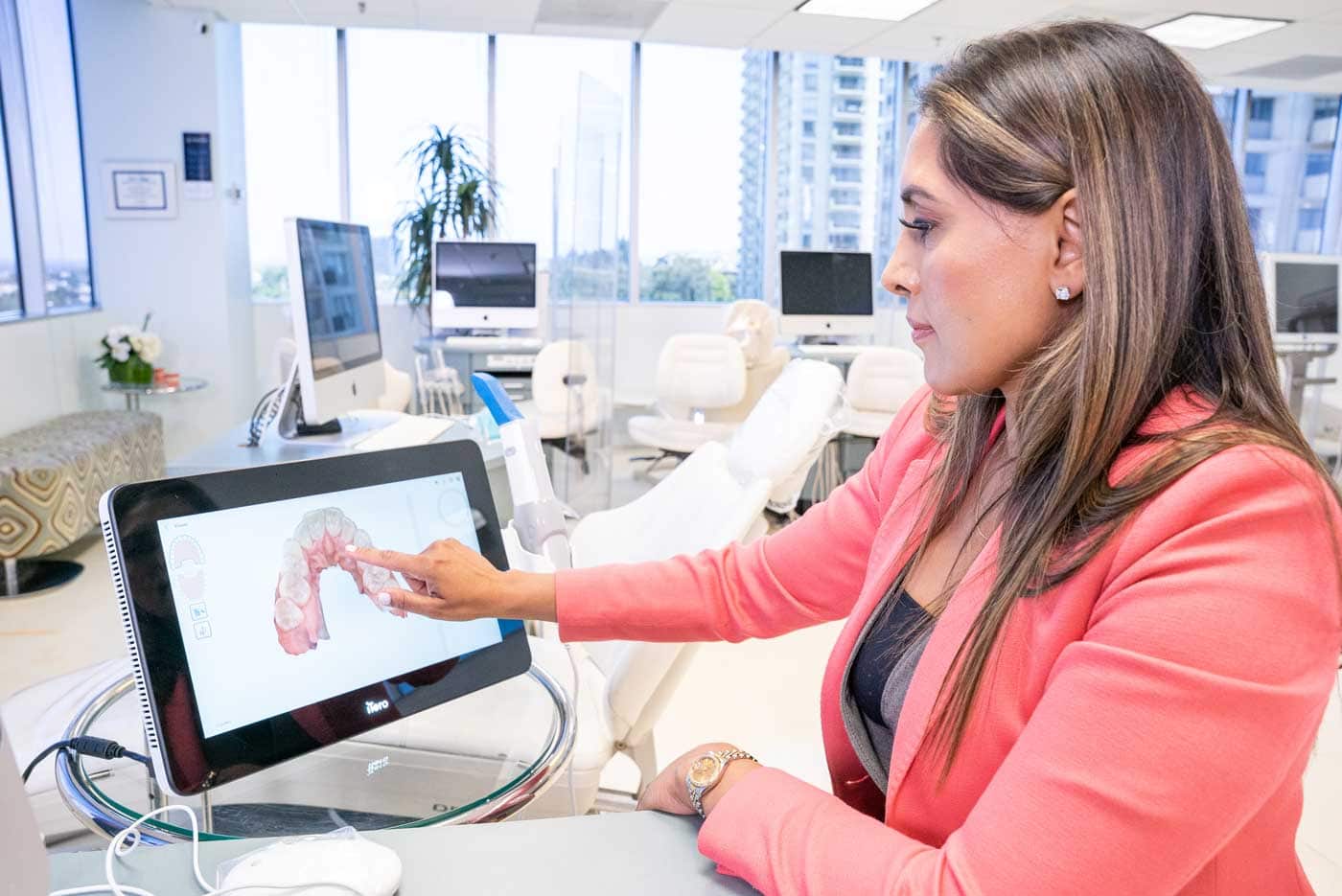
The medical history tells your orthodontist what to look for; the records show what is actually there. At BHO planning starts with 5D iTero digital scans and digital imaging, which show root positions, bone levels, and bite relationships before any force is applied. In our practice, the cases that go smoothest with a complex health history are the ones where the history was complete on day one.
Which Situations Call for Waiting Rather Than Starting?
A short list of situations is better handled by timing than by appliance choice. In each case the treatment is still available; the calendar is what changes.
An unresolved dental problem
Decay, a failing restoration, or an unstable tooth gets treated first. Starting orthodontics over an unresolved problem means interrupting treatment later to fix it, which is slower than fixing it now.
A condition that is not yet controlled
When a systemic condition is in an active or unstable phase, the sensible move is to let it stabilize with the physician managing it and then begin. Orthodontics is elective in its timing, even when it is necessary in its purpose, and that flexibility is worth using.
A period when routines are disrupted
Aligner treatment in particular assumes a predictable daily routine. Patients heading into a stretch where that is unrealistic are usually better served either by waiting or by choosing a fixed appliance. Deciding that up front avoids the most common cause of aligner treatment running long.
When surgery may be part of the plan
If the bite involves a skeletal component that may require a surgical step, the orthodontic and surgical sequences have to be planned together from the start. That is a planning conversation at the consultation, not a discovery midway through.
What waiting should look like
A clear reason, a specific thing being resolved, and a defined point at which you come back. If a practice tells you to wait without naming what is being waited on, ask. In our practice, a hold always comes with the condition attached to it and a scheduled point to re-evaluate, whether the eventual plan is Invisalign or a fixed appliance.
Frequently Asked Questions About Medical Conditions and Orthodontics
Can I get Invisalign if I have gum disease?
Not while it is active. Once the gum disease is treated and stable, aligners are often the preferred choice for these patients, because trays can be removed for thorough cleaning. Your orthodontist will want confirmation from whoever managed the periodontal treatment before starting.
Do I have to tell my orthodontist about medications for an unrelated condition?
Yes. Several common medications act on bone turnover, bleeding, healing, or saliva, all of which affect tooth movement and oral health during treatment. Withholding them does not prevent problems; it prevents the orthodontist from planning around them.
Will a medical condition make treatment take longer?
Sometimes. Conditions and medications that slow bone remodeling usually mean lighter forces and a longer active phase. The finished result is typically the same — it just arrives on a more patient schedule.
Is there an age at which a medical history makes braces a bad idea?
Age itself is not the deciding factor. Adults of any age are treated routinely; what governs candidacy is gum health, bone support, and whether existing conditions are controlled. A healthy 60-year-old is often a better candidate than a 30-year-old with untreated gum disease.
Getting a Straight Answer About Your Own Case — Not a General One
General information cannot tell you whether your condition affects your plan, because that depends on your gum health, your bone, your medications, and your bite together. The only way to know is a consultation that includes a real health history and real records. If you would like an honest read on where you stand, you can request your free consultation at any of our four Los Angeles-area locations, or call or text us at (310) 785-0770. Bring your medication list — it makes the first visit far more useful.