
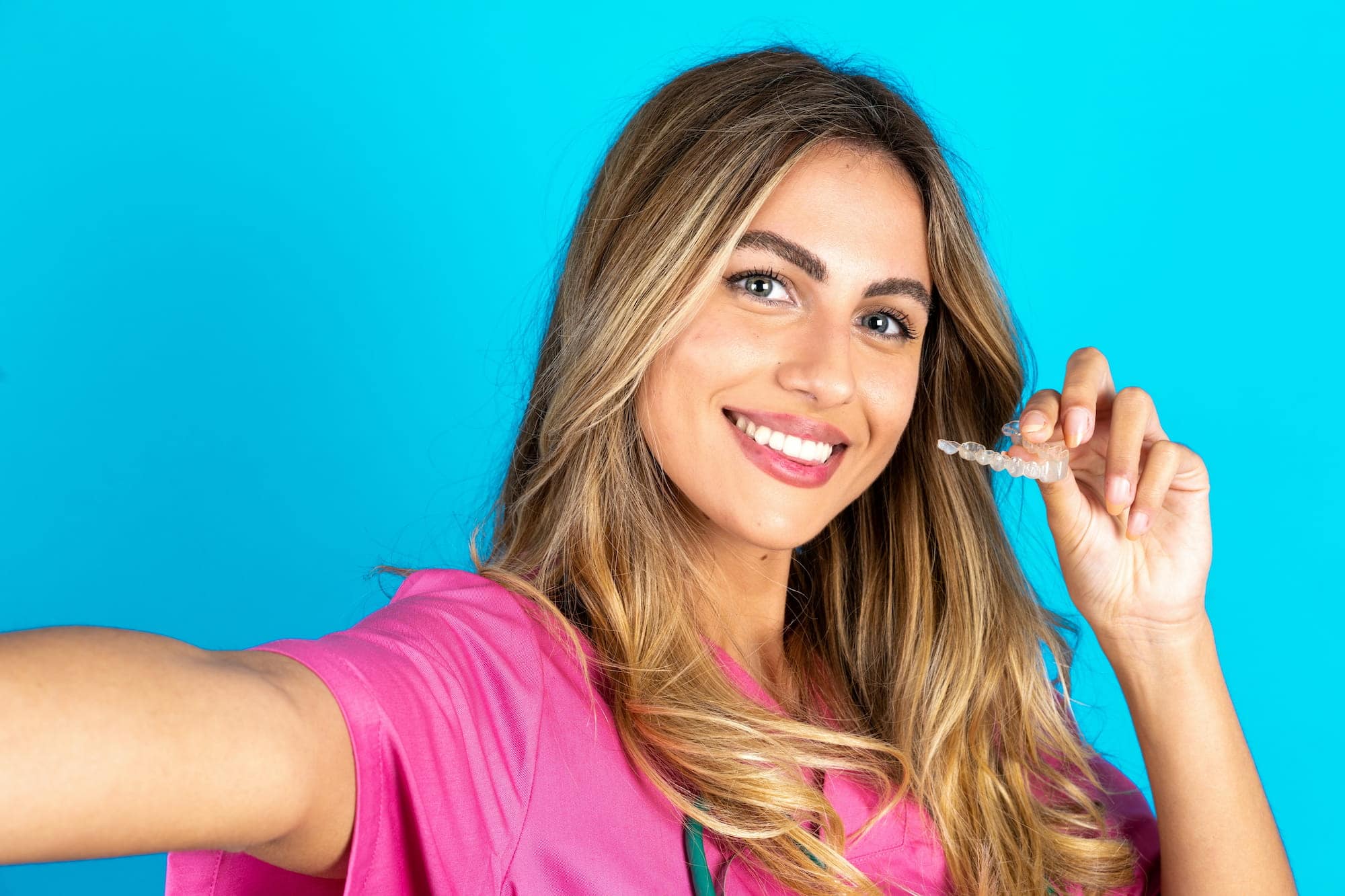
The Average Cost of Invisalign vs. Braces in LA
The average cost of Invisalign in the Los Angeles area ranges from $3,000 to $8,000, while traditional metal braces typically cost between $3,000 and $7,000. Your final price depends on case complexity, treatment duration, and your orthodontist’s experience level.
Orthodontic costs in major metro areas like Los Angeles tend to run higher than national averages. That’s simply the reality of elevated operating costs. But what matters more than the sticker price is the value you receive and the results you achieve.
Ceramic braces, which blend with your teeth for a more discreet look, generally fall between $4,000 and $8,000. Lingual braces (placed behind your teeth) represent the premium option, often ranging from $6,000 to $10,000 or more due to their specialized placement and customization requirements.
These ranges aren’t random numbers. They reflect real differences in treatment complexity. A simple spacing case requiring six months of treatment costs significantly less than correcting a severe overbite that needs two years of careful adjustment.
Insurance coverage can offset $1,000 to $3,000 of your total cost, depending on your plan. Many practices, including Beverly Hills Orthodontics, also offer flexible payment options that make treatment accessible regardless of the upfront cost.
The most accurate way to understand your specific cost? An in-person evaluation where your orthodontist can assess your bite, your alignment, and what you’re hoping to achieve, then provide a detailed treatment plan with clear pricing.
How Invisalign and Braces Pricing Works: What You’re Actually Paying For
What Does an Orthodontic Treatment Fee Include?
When you see a price quote for straighter teeth or a corrected bite, you’re not just paying for metal brackets or plastic aligners. At practices like Beverly Hills Orthodontics, you’re paying for a complete treatment experience that covers every step from your first visit to your final retainer.
Your treatment fee typically includes:
- Initial free consult and diagnostics: X-rays, photographs, and 3D digital scans that map your teeth with precision
- Custom treatment planning: Your orthodontist designs a plan built around your specific bite and alignment needs
- Appliance fabrication: Whether that’s custom brackets or a full series of Invisalign aligners made specifically for your teeth
- Ongoing care visits: Regular adjustments for braces or progress checks for Invisalign
- Retainers: The essential final step that keeps your new smile in place
- Post-treatment follow-up: Making sure everything stays exactly where it should
How Should You Compare Quotes Between Practices?
Some practices quote all-inclusive fees that bundle everything together. Others itemize each component separately. Neither approach is better or worse, but you should always ask what’s included before comparing quotes between offices.
A Blue Diamond Top 1% Provider like Beverly Hills Orthodontics brings significant experience to your treatment. That expertise means more efficient treatment planning, fewer mid-course corrections, and better final results. Sometimes paying a bit more upfront saves money (and time) in the long run.
What Are the Benefits of Invisalign and Braces? Value Beyond the Price Tag
Both Invisalign and braces deliver lasting benefits that extend well beyond straight teeth, including improved oral health, corrected bite function, and increased self-confidence. Cost matters. But so does what you’re getting for that cost.
What Are the Key Advantages of Invisalign?
- Nearly invisible appearance, so you can smile confidently during treatment
- Removable design makes eating, brushing, and flossing simple
- Smooth plastic means no mouth irritation from brackets or wires
- Fewer office visits, which is a real plus if you have a packed schedule or a long commute across Los Angeles
- Digital treatment preview shows your expected results before you even start
- You can take them out for photos, special events, or a big presentation at work. That flexibility is hard to beat.
What Are the Key Advantages of Braces?
- Highly effective for complex cases, including severe crowding and significant bite issues that aligners can’t always address
- No compliance requirement. They work around the clock without you thinking about it.
- Multiple braces options available (metal, ceramic, lingual) to match your preferences
- Decades of proven results across millions of patients worldwide
- Often the better choice for younger patients who might lose or forget aligners
What Benefits Do Both Options Share?
- Better oral health through improved tooth alignment
- Corrected bite function that protects against uneven wear and long-term damage to your teeth
- A real boost in self-confidence that impacts every area of your life
- Prevention of costly dental problems down the road
Modern orthodontic technology has made both treatments more comfortable and efficient than ever. Braces are smaller and sleeker than they used to be. And aligners? More precise and predictable than even a decade ago. You’re getting better results in less time than patients did years back. At Beverly Hills Orthodontics, the team stays current with the latest advances in both systems to give patients the best possible outcomes.
Invisalign vs. Braces: Average Cost and Feature Comparison
Here’s how Invisalign and braces compare across cost, visibility, treatment time, and lifestyle fit. Choosing between them isn’t just about cost. It’s about finding the right match for your teeth, your lifestyle, and what you want your results to look like.
| Feature | Metal Braces | Ceramic Braces | Lingual Braces | Invisalign |
|---|---|---|---|---|
| Cost Range | $3,000 to $7,000 | $4,000 to $8,000 | $6,000 to $10,000+ | $3,000 to $8,000 |
| Visibility | Most visible | Semi-discreet | Hidden (behind teeth) | Nearly invisible |
| Treatment Duration | 18 to 24 months avg | 18 to 24 months avg | 18 to 24 months avg | 12 to 18 months (moderate cases) |
| Removability | Fixed | Fixed | Fixed | Removable |
| Maintenance | Special brushing required | Special brushing required | Challenging to clean | Remove to brush normally |
| Office Visits | Every 4 to 8 weeks | Every 4 to 8 weeks | Every 4 to 8 weeks | Every 6 to 10 weeks |
| Best For | Complex cases, all ages | Aesthetics-conscious adults | Maximum discretion | Mild to moderate cases, busy adults |
A few things this table can’t capture:
Invisalign requires discipline. You need to wear your aligners 20-22 hours daily for optimal results. Take them out for meals and cleaning, then put them right back in. If compliance is a concern, braces might actually be the smarter choice since they work whether you think about them or not.
Braces handle severe malocclusion better. If you have significant jaw discrepancies or complex bite issues, traditional braces often provide more precise control. Your orthodontist can make micro-adjustments at each visit that aren’t possible with pre-fabricated aligners.
As a Blue Diamond Top 1% Provider, Beverly Hills Orthodontics has the depth of experience to recommend the right option based on your specific case, not a generic recommendation that ignores your individual needs. For patients across the greater Los Angeles area, that level of personalized attention makes a real difference.
The “best” option is whichever one addresses your specific needs most effectively. That determination requires professional evaluation, not internet research alone.
What Factors Affect the Cost of Invisalign and Braces?
The main factors affecting orthodontic costs include case complexity, treatment duration, the number of refinements needed, your insurance coverage, and your provider’s credentials. Each of these plays a direct role in your final price, which is why two patients rarely pay the same amount.
Your neighbor’s treatment cost tells you almost nothing about what yours will be. Here’s why pricing varies so much from person to person.
How Does Case Complexity Affect Price?
Case complexity drives cost more than anything else. Mild crowding that requires six months of treatment costs substantially less than correcting a severe overbite combined with spacing issues and rotated teeth. More complex cases need more time, more materials, and more expertise.
How long will your treatment take? Treatment duration directly impacts your price. Longer treatment means more aligner sets for Invisalign patients and more adjustment visits for braces patients. A 12-month case simply uses fewer resources than a 24-month case.
Refinements and mid-course corrections can also add up. With Invisalign, some patients need additional aligner sets to perfect their results. These refinements are sometimes included in the original fee and sometimes billed separately. Always ask about refinement policies before starting treatment.
Does Insurance Cover Orthodontic Treatment?
Insurance coverage is another variable that shifts the equation significantly. Many dental plans include orthodontic benefits that can offset $1,000 to $3,000 of your treatment cost. Some plans cover Invisalign and braces equally, while others favor one over the other. Check your specific benefits before assuming coverage.
How Do Payment Plans and Provider Credentials Factor In?
Flexible payments help you start sooner. FSA and HSA accounts let you use pre-tax dollars for orthodontic care. Many practices in the Beverly Hills and Los Angeles area offer in-house financing with monthly payments that fit your budget. Beverly Hills Orthodontics provides a payment calculator on their website so you can explore options before your free consult.
And then there’s the question of who’s treating you. A board-certified orthodontist with significant experience, such as an AAO-member specialist or a Blue Diamond Top 1% Provider, typically charges more than a general dentist offering aligners. But that expertise often means better results, fewer complications, and shorter treatment times. The AAO recommends choosing a board-certified orthodontist for the best outcomes.
Who Is a Good Candidate for Invisalign vs. Braces?
Not everyone is a good fit for every treatment option. Understanding candidacy helps you set realistic expectations before your free consult.
Who Is a Good Candidate for Invisalign?
- Teens and adults with mild to moderate crowding
- Patients with spacing issues between teeth
- Those with minor bite problems (overbite, underbite, crossbite)
- People who prioritize aesthetics during treatment
- Busy professionals who prefer fewer office visits (and honestly, who doesn’t?)
- Anyone committed to wearing aligners consistently
Who Is a Better Candidate for Braces?
- Patients with severe crowding or significant tooth rotation
- Complex bite issues requiring precise tooth movement
- Jaw discrepancies that need coordinated treatment
- Younger children who may lose or forget aligners
- Cases requiring teeth to be moved vertically
Phase One orthodontics may benefit children as young as seven. Early intervention can guide jaw development and create space for permanent teeth, potentially simplifying later treatment. The American Association of Orthodontists recommends children have their first orthodontic evaluation by age seven.
Lifestyle factors matter too. Maybe you want the flexibility to remove your aligners for special occasions. Or maybe you’d rather not think about your treatment at all. Contact sports can make brackets tricky, while aligners require a level of daily discipline that doesn’t suit everyone.
Here’s the truth: only an in-person evaluation can determine your best option. Photos and descriptions provide general guidance, but your orthodontist needs to examine your teeth, review your X-rays, and understand your goals before making a recommendation. At Beverly Hills Orthodontics, a Blue Diamond Top 1% Provider with locations across the Los Angeles area, the team evaluates candidacy for both Invisalign and braces during every free consult so you can make an informed decision.
Frequently Asked Questions About Invisalign and Braces Costs
How much does Invisalign cost without insurance?
Without insurance, Invisalign costs $3,000 to $8,000 in Los Angeles depending on your case complexity and treatment duration. Simple cases requiring fewer aligners fall on the lower end, while full treatment for more involved issues approaches the higher end. Many practices offer payment plans that spread this cost into manageable monthly amounts.
Is Invisalign more expensive than braces?
Not necessarily. Invisalign and traditional metal braces often cost about the same for comparable cases. The perception that Invisalign costs more usually comes from comparing different case complexities. When you compare similar situations, the price difference is usually minimal. Ceramic and lingual braces often cost more than both standard metal braces and Invisalign. Beverly Hills Orthodontics can walk you through exact pricing for both options during a free consult.
Does dental insurance cover Invisalign the same as braces?
Many dental insurance plans with orthodontic benefits cover Invisalign and braces equally, typically contributing $1,000 to $3,000 toward treatment. Some older plans specifically exclude clear aligners, though. Contact your insurance provider directly to confirm your coverage details before starting treatment. The team at Beverly Hills Orthodontics can also help you verify your benefits.
Are there payment plans available for Invisalign or braces?
Yes. Most orthodontic practices offer flexible payment options including monthly payment plans, often with little or no interest. You can also use FSA or HSA funds to pay with pre-tax dollars. Beverly Hills Orthodontics provides a payment calculator on their website to help you explore financing options before your visit.
How can I get the most accurate cost estimate for my treatment?
Schedule a free consult with a qualified orthodontist. During this visit, they’ll take diagnostic records, evaluate your specific needs, and provide a detailed treatment plan with upfront pricing. Many practices, including Beverly Hills Orthodontics across their Los Angeles-area offices, offer complimentary initial evaluations. This one-on-one assessment is the only reliable way to get an accurate quote, since tooth position, bite alignment, and bone structure vary so much from person to person. Both Invisalign and braces can deliver lasting results when matched to the right case, and a qualified orthodontist can help you explore your options based on your individual needs.