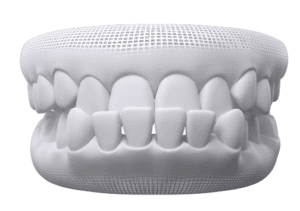
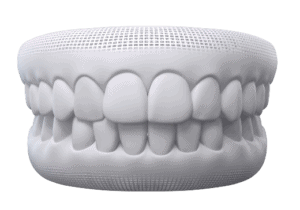
An underbite is a dental misalignment that happens when the lower jaw rests in front of the upper jaw when the mouth is closed. While underbites can take more intervention to realign, it is possible to do an underbite correction without surgery – you just need to start early and work with a great orthodontist.
Underbite Correction Without Surgery
There are several ways to correct an underbite if you get started at a young age. Beginning treatment early with Phase I Orthodonticsallows your orthodontist to help guide your jaw bones into the proper position as they develop.
Underbite Correction Without Surgery
Reverse pull headgear is an orthodontic appliance typically worn overnight. The appliance has a metal section attached semi-permanently around the back teeth of the upper jaw and acts like an anchor. Elastics connect the metal piece to the removable headgear that presses gently on the patient’s chin and forehead. Over time, the pressure from the elastics encourages the upper jaw to grow forward until the top teeth can rest properly upon the lower jaw.
A palatal expander is a fixed appliance used to widen the patient’s upper jaw. Expanding the upper jaw creates more space for teeth and improves jaw alignment. Along with correcting underbites, palatal expanders can reduce crowding and other misalignments.
Traditional braces use metal brackets connected by an archwire to put gentle pressure on your teeth, guiding them into their proper positions. Braces can be paired with elastic bandsstrategically attached to specific brackets to give a little extra force to pull upper teeth forward until they reach the correct position.
In some instances, you may need to create extra space within the mouth to allow the teeth and jaws to align correctly. Depending on the severity of the underbite, you may need to get certain teeth extractedto provide the space for the other appliances to work.
Dental Problems Caused By Untreated Underbites
Underbites can cause several problems, from aesthetics and lowered self-esteem to functional issues and long-term dental concerns. Getting an orthodontic consultation as early as possible is essential to prevent these problems from occurring.
Some problems that can occur because of untreated underbites include:
Difficulty Chewing
TMJ Pain
Bone Loss
Speech Problems
Tooth Fractures
Sleep Apnea
Increased Tooth Wear
Dental Decay
Social Anxiety
An expert orthodontist will be able to diagnose your alignment problems and create a personalized treatment plan to correct any misalignments as you grow.
It’s important to note that the effectiveness of non-surgical methods depends on several factors, including your age and the severity of your underbite. Orthodontic treatment is typically more successful in younger individuals when the jaw is still growing and developing, so it’s essential to schedule a consultation as early as possible. In some cases, severe underbites or cases with skeletal discrepancies may require surgical intervention to get the best results. If you have an underbite that requires surgical intervention, know that your orthodontist will help you find the best orthognathic surgeon to work with your treatment plan to get you the smile you love.
Looking for Underbite Correction Without Surgery? Beverly Hills Orthodontics Is the Place For You!
Underbites are easiest to treat at a young age through Phase I early orthodontic treatment. It can be possible to get complete underbite correction without surgery through a combination of palatal expanders, reverse-pull headgear, braces, and possible extractions.
Can you get underbite correction without surgery? With an expert orthodontist, you can! Call or text us at 310-785-0770, visit our contact page, or book an appointmenttoday.
We're Hiring! Contact Us for Details on Open Positions!
underbite correction, jaw alignment without surgery, jaw correction without surgery, underbite correction without surgery, braces underbite correction, underbite treatment near me, can an underbite be fixed without surgery, severe underbite treatment, underbite treatment, how do you fix an underbite, underbite fix without surgery
```html
Understanding the Importance of Early Intervention
Early intervention is crucial when it comes to correcting underbites without surgery. The earlier you begin treatment, the more effective the results can be. Children and adolescents are particularly good candidates for non-surgical methods, as their jaws are still growing and can be guided into the correct position more easily. By starting treatment early, you can take advantage of the natural growth processes of the jaw, which can lead to a more favorable outcome with less invasive techniques.
In addition to improving the alignment of the teeth and jaws, early intervention can also help prevent more serious dental issues down the line. Untreated underbites can lead to problems such as tooth wear, jaw pain, and even difficulties with speech. By addressing these issues early, you not only enhance your smile but also promote better overall oral health and function.
Choosing the Right Orthodontic Treatment
When it comes to underbite correction without surgery, there are several orthodontic treatment options available. Palatal expanders, for instance, can help create additional space in the mouth, allowing the upper jaw to grow forward and align properly with the lower jaw. Additionally, reverse-pull headgear can be used to guide the upper jaw into a more favorable position. Traditional braces are also effective, as they apply gentle pressure to move teeth into their correct positions over time.
It's essential to work closely with a qualified orthodontist to determine the best treatment plan for your specific needs. Factors such as the severity of your underbite, your age, and your overall dental health will influence the recommended approach. A personalized treatment plan will ensure that you achieve the best possible results while minimizing the need for more invasive procedures.
underbite correction, jaw alignment without surgery, jaw correction without surgery, underbite correction without surgery, braces underbite correction, underbite treatment near me, can an underbite be fixed without surgery, severe underbite treatment, underbite treatment, how do you fix an underbite, underbite fix without surgery
```html
Understanding the Importance of Early Intervention
Early intervention is crucial when it comes to correcting underbites without surgery. The earlier you begin treatment, the more effective the results can be. Children and adolescents are particularly good candidates for non-surgical methods, as their jaws are still growing and can be guided into the correct position more easily. By starting treatment early, you can take advantage of the natural growth processes of the jaw, which can lead to a more favorable outcome with less invasive techniques.
In addition to improving the alignment of the teeth and jaws, early intervention can also help prevent more serious dental issues down the line. Untreated underbites can lead to problems such as tooth wear, jaw pain, and even difficulties with speech. By addressing these issues early, you not only enhance your smile but also promote better overall oral health and function.
Choosing the Right Orthodontic Treatment
When it comes to underbite correction without surgery, there are several orthodontic treatment options available. Palatal expanders, for instance, can help create additional space in the mouth, allowing the upper jaw to grow forward and align properly with the lower jaw. Additionally, reverse-pull headgear can be used to guide the upper jaw into a more favorable position. Traditional braces are also effective, as they apply gentle pressure to move teeth into their correct positions over time.
It's essential to work closely with a qualified orthodontist to determine the best treatment plan for your specific needs. Factors such as the severity of your underbite, your age, and your overall dental health will influence the recommended approach. A personalized treatment plan will ensure that you achieve the best possible results while minimizing the need for more invasive procedures.