
What Separates a Premium Orthodontic Consultation From a Standard One?
A premium consultation gives you four things a standard one usually compresses. Full digital diagnostics. Real one-on-one time with the orthodontist rather than only a coordinator. Every option that genuinely applies to your case, explained. And a written fee breakdown before you leave. A standard consultation can still produce a valid plan — it just tends to arrive as a quick look and a price.
The distinction matters because the consultation is where your entire treatment is decided. Appliance choice, sequencing, timeline and cost are all set here, and every one of them is easier to get right with records than without them.
Below is what each element actually looks like, how to tell the difference while you are sitting in the chair, what a free consultation should and should not include, the questions worth asking, and what to bring so the visit is worth your time.
Why Do Digital Diagnostics Change the Quality of the Plan?
This is the biggest single difference between a thorough consultation and a quick one, and it is the easiest to verify.
What a digital scan captures that a visual exam cannot
A visual exam shows the surfaces of your teeth. A digital scan and imaging show root positions, bone levels, arch width and how the upper and lower jaws relate to each other. Those are the things that determine which appliances can achieve your result, so a plan built without them is an estimate.
Scanning instead of putty impressions
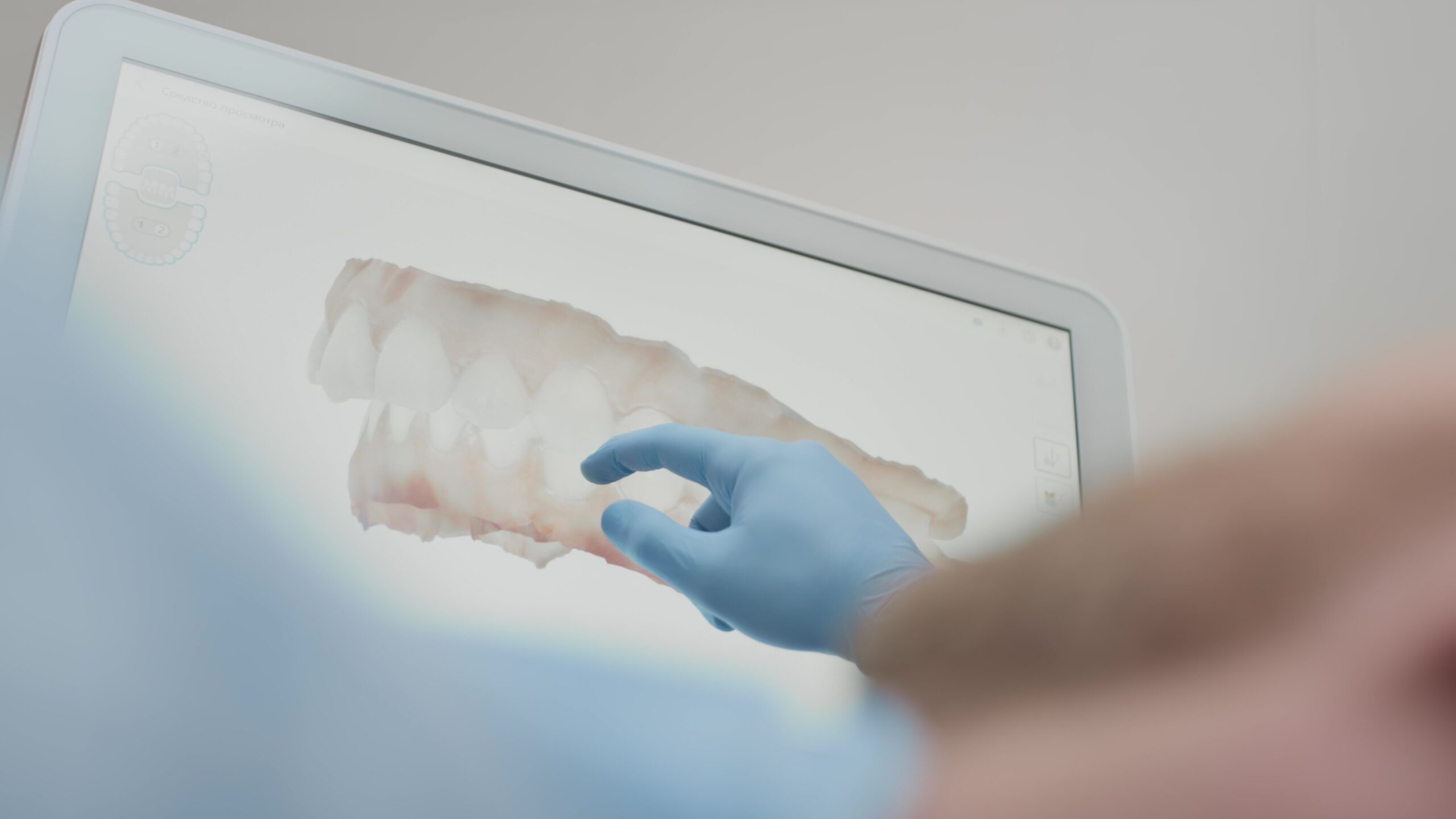
At BHO the consultation includes 5D iTero digital scanning and digital radiography rather than traditional putty impressions. It is faster, more comfortable, and the data can be reviewed on screen with you in the room instead of being sent away.
Seeing a simulation before you commit
Because the scan is digital, it can be used to show a projected outcome for your own teeth. That turns an abstract conversation about options into something you can look at, and it makes it far easier to ask informed questions.
Why diagnostics protect you from the wrong appliance
Two patients with similar-looking front teeth can need opposite treatments, because in one the roots are upright and in the other they are tipped. Without imaging, that distinction is invisible — and it is exactly the kind of detail that turns into a stalled case at month nine.
How Much Time Should You Actually Get With the Orthodontist?
In some offices a consultation is handled almost entirely by a treatment coordinator, with the orthodontist appearing briefly at the end. That is the clearest marker of a standard consultation.
Who examines you, and who plans your case
A coordinator can take records and explain logistics well. What they cannot do is make the clinical judgments the plan depends on. In a premium consultation, the orthodontist examines you, reviews your scan with you, and explains the reasoning themselves.
Why one accountable clinician matters over 12 to 30 months
Orthodontic treatment is a long series of connected decisions, not a single procedure. Meeting the person who will make those decisions — and who will still be making them at month eighteen — is part of what you are evaluating. It is one of the practical reasons patients seek out an owner-led practice.
The tell: whether clinical questions get answered in the room
Ask why one appliance is being recommended over another. If the answer requires checking with someone who is not present, you have learned who is actually planning your case.
What a thorough consultation feels like
Unhurried, specific to your teeth rather than generic, and two-directional — your goals and constraints should shape the plan, not just your scan.
What Should Be Explained About Your Treatment Options?
A premium consultation explains every option that genuinely applies, including the ones the practice makes less money on and the ones it does not offer.
All applicable systems, with real tradeoffs
For most cases that means comparing Invisalign, InSmile behind the teeth, and braces against the movements your case needs — not presenting whichever the office prefers to sell.
Why an option is ruled out, not just that it is
Hearing “you are not a candidate for aligners” is far less useful than hearing which specific movements your case requires and why a fixed appliance is more predictable for them. The second answer is checkable; the first is not.
Timeline, phases and what happens if the plan changes
A good explanation includes roughly how long treatment runs, what happens at each stage, and how a mid-course correction would be handled. Cases sometimes need adjusting; a practice that never raises the possibility is not being straight with you.
Retention, before treatment starts
Retention is part of the result, not an add-on. Ask what retainers you will need, for how long, and whether they are included in the fee. The answer belongs at the consultation, not at debond.
What Should Happen After the Consultation, Before You Decide?
The hours after a consultation are part of the process, and a thorough practice builds for them rather than trying to close in the room.
You should leave with something written
A summary of the diagnosis, the recommended plan, the alternatives and the fees. If everything was verbal, there is nothing to compare against a second opinion and nothing to hold the practice to later.
A second opinion should be welcomed, not discouraged
Practices confident in their diagnosis have no reason to resist you seeking another view, particularly for complex cases. Resistance to a second opinion is one of the clearer warning signs in this field.
Your questions after the visit should still get answered
Most patients think of their real questions on the drive home. How easily you can get those answered — and whether the answers come from someone clinical — previews the next two years of communication.
Nothing should expire
A fee that drops only if you sign today is a sales tactic, not a clinical judgment. A sound plan is still sound next week, and so is a fair fee.
What Does a Transparent Fee Discussion Look Like?
The fee conversation is where consultations differ most in practice, and it is straightforward to test.
| Element | Premium consultation | Standard consultation |
|---|---|---|
| Diagnostics | Digital scan and imaging reviewed with you | Visual exam, records taken later |
| Who you see | The orthodontist examines and explains | Mostly a treatment coordinator |
| Options | Every applicable system, with tradeoffs | The system the office leads with |
| Fees | Written breakdown of what is and is not included | A headline number or monthly figure |
| Retention | Discussed and priced up front | Raised near the end of treatment |
| Leaving with | A plan you can explain to someone else | A quote |
What the quoted number should include
Records, all routine adjustment visits, refinements or revised aligner sets, and retainers. Ask what would change the number and under what circumstances — that single question prevents most billing surprises.
Monthly payment figures are not case fees
A low monthly number can attach to a long term and a larger total. Compare total case fees between practices, then compare payment plans separately.
Why no pressure is a quality signal
A practice confident in its diagnosis does not need you to decide today. In our practice, patients who take the plan home and compare it are usually the ones who start treatment with the fewest doubts.
What Questions Separate a Useful Consultation From a Sales Pitch?
You can raise the quality of any consultation by asking a handful of questions, because the answers reveal how the practice actually operates rather than how it markets itself.
Who will treat me at each visit?
This is the most informative question you can ask, and the answer should be a specific person rather than the team. If clinicians rotate between locations, it is better to know now than at month ten.
Why this appliance for my case specifically?
A strong answer names the movements your case requires and why the recommended system handles them predictably. A weak answer describes the appliance in general terms, which tells you the case has not been examined closely.
What is included in the fee, and what would change it?
Ask about records, all adjustment visits, refinements or revised aligner sets, retainers and replacements. Then ask what circumstances would increase the total. Practices that answer precisely rarely generate billing complaints.
How will we know whether treatment is on track?
The answer you want involves scheduled checkpoints where actual tooth positions are compared against the plan. That is what catches a case that has stopped responding early instead of late.
What happens if the plan needs to change?
Cases sometimes need adjusting, and how readily a practice discusses that scenario is a quality signal in itself. An office that presents treatment as risk-free is managing your expectations rather than informing them.
Can I see finished cases like mine?
General galleries are marketing; cases resembling yours are evidence. It is entirely reasonable to ask, and a practice that treats your case type regularly will have examples ready.
Frequently Asked Questions About Orthodontic Consultations
Is a free consultation worse than a paid one?
Not inherently. What matters is what the visit includes. A free consultation with a digital scan, real time with the orthodontist and a written fee breakdown is more thorough than a paid visual exam. Ask what is included rather than judging by the price.
What should I bring to an orthodontic consultation?
Any recent dental X-rays or records, a list of medications and relevant medical history, your dental insurance details, and your questions written down. Medical history and medications genuinely affect planning, so they are worth having with you.
How long should a thorough consultation take?
Long enough for records, an examination, an explanation of your options and a fee discussion without anything feeling rushed. The better measure is not the clock but whether you can explain your own plan afterwards.
Should I get more than one consultation?
Often yes, especially for a complex case or when a first opinion rules out an option you wanted. Two plans built from real records are genuinely comparable; two price quotes are not.
See What a Thorough Consultation Actually Includes
The fastest way to judge a consultation is to sit through a thorough one. Ours includes a full digital scan, time with the orthodontist, every option that applies to your case, and your fees in writing before you leave, with no pressure to decide on the spot. You can request your free consultation at any of our four Los Angeles-area locations, or call or text us at (310) 785-0770.